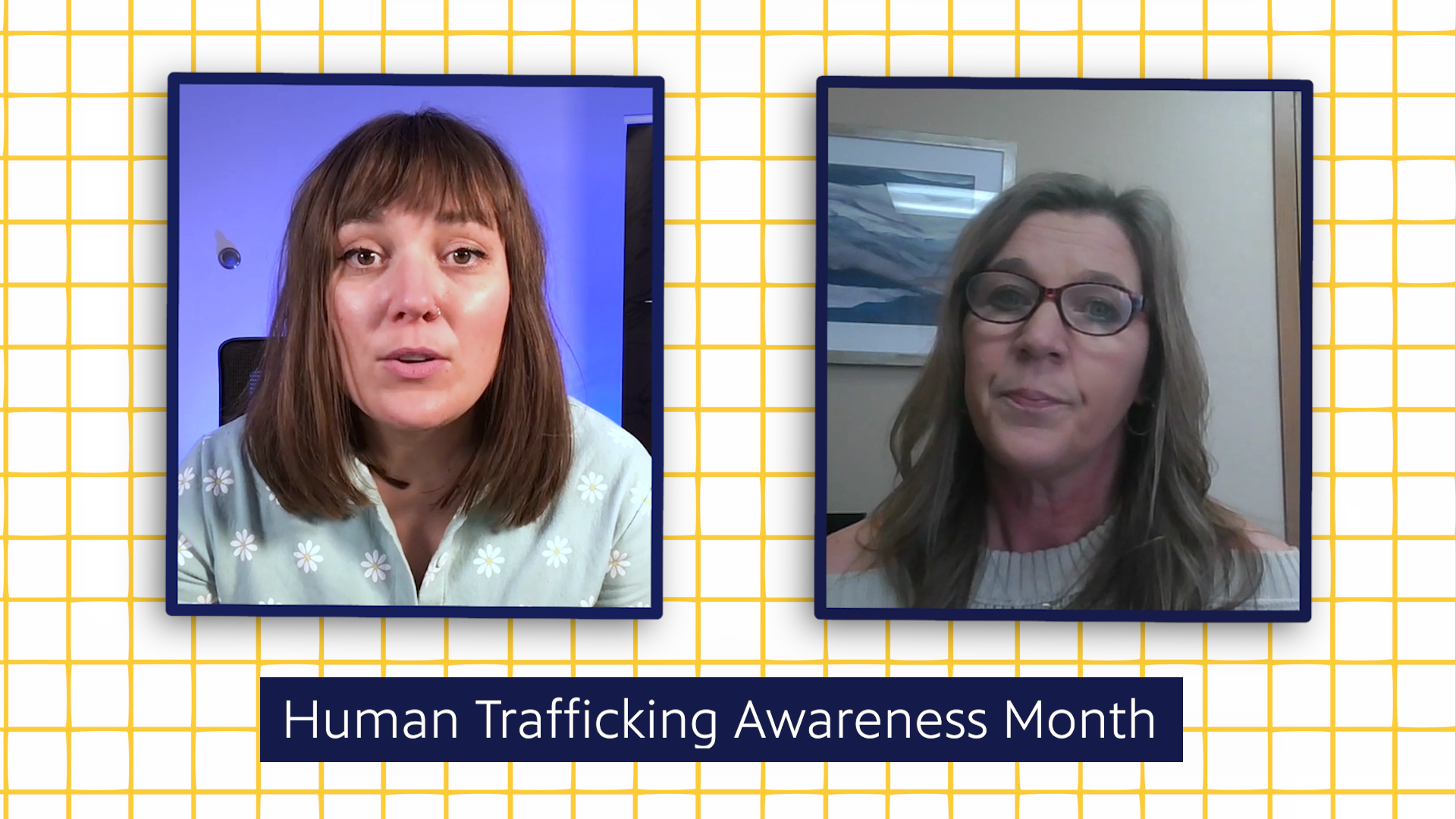
Amanda: Can you talk about how COVID-19 has impacted domestic abuse and trafficking?
Becci: When COVID started, ... so March, 2020, when things really got brought to a head, and then the stay-at-home orders and all of that kicked in, what we saw was that victims stopped calling. We saw a real ... decrease in number of people reaching out to us and that was because of the stay-at-home order. Domestic violence and trafficking is about isolation. Stay-at-home order just feeds that. A lot of times people get support from their doctors, their nurses, teachers and family members, and that was taken away. So we saw a real decrease in people reaching out. Then I would say probably four to six months after that all was in place, we saw a real increase. We started to get the calls again and so that started to pick up. But we also saw that the abuse that people were experiencing was much more severe. And so that was, that was a real adjustment for my staff and adjusting the way that I supported my staff, so that they could continue to provide services. The other thing about COVID-19, the way that it affected the people that we work with, is housing is such an issue. There's always been a real connect between domestic violence and the lack of housing and homelessness, especially for women and children connected to domestic violence and trafficking. That has been more of an issue and we've really stepped up our game, and we've had to out of necessity for the people that we serve, to learn more about the housing world. We were able to develop and set up two local safe houses because what we were finding is that people didn't want to go, or they weren't able to get into a shelter. And our local shelters, our closest ones are in Wilmer, Mankato, the metro area. If we had a victim who was in need of housing or immediate shelter, they would have to uproot and leave the area completely, so if they had a job or their children were in school, it was just another barrier. So through COVID funding, we were able to set up those houses and we've been able to maintain those.
Amanda: What are some of the common misconceptions about trafficking?
Becci: That human trafficking doesn't happen here. That's probably the biggest one. Sometimes we hear that it doesn't even happen in the United States. Well, that's not true. The other one is that victims are only foreign-born and they're poor, which is not true. Anyone of any race, any socioeconomic background is susceptible to falling into being a victim of trafficking. The biggest one probably is that human trafficking and human smuggling are the same. A lot of times when people hear about trafficking, they think about the ... white vans with somebody that comes in and grabs someone and sticks them in the van. That's not the way that trafficking works. Most of the time, victims of human trafficking know their traffickers, and a lot of times they are related to their traffickers. The other one that we hear a lot is that victims will attempt to seek help in public and that's not true. A victim of trafficking often just remains quiet, doesn't say anything to anyone, because it's a danger for them. We have worked with several trafficking victims that, not only are they in danger if they say something, but the people that they love and they care about are also in danger.
Amanda: So what are some of the common signs of trafficking, and what can people do, if they suspect that someone is being trafficked?
Becci: Well, a lot of times people seem disconnected to friends and families, to the community, organizations. Maybe they belong to a church and they kind of disconnect from people. So that usually is a sign. Youth, a lot of times they'll drop out of school. They'll stop going to school on a regular basis. That can be a sign. There's a sudden or a dramatic change in behavior; that person may seem disoriented or confused, they might be showing signs of mental or physical abuse, they might have bruises in different stages of healing, they could be fearful, timid or submissive. What we see a lot of times is that someone else is controlling their life, they have someone that they have to report to at all times, that they are constantly being monitored, who they talk to, where they go.
Amanda: So what is some of the work that's being done in this area that gives you hope?
Becci: Oh goodness, that's a good question. We're really excited; WRAP was awarded funds to provide services, support services, to victims of trafficking, in 2020, through the Minnesota Department of Health, through a program called Safe Harbor. Safe Harbor specifically funded us to provide supportive services, such as maybe they need help with clothing, or they need help working with law enforcement, or maybe they need someplace safe to go, or they need assistance to get out of this area, to flee the exploitation or the trafficking. We have funds available and I have staff specifically trained to work with victims of trafficking, so that's really encouraging. And we are specifically funded for Lincoln, Lyon, Redwood and Yellow Medicine counties. There are other programs available through Safe Harbor that work with different areas of the state. And if somebody is in need or if they'd like to get connected to a program that's in their area and not within ours, you can go to the Minnesota Department of Health and search Safe Harbor and there's a list of all of those programs and how to get connected to those.
So little background on Safe Harbor, Safe Harbor is a program that, it is a law that was passed in 2011. That's kind of where we started from. And for the first time in 2011, Minnesota youth who engaged in prostitution, were no longer looked at as criminals, but as victims and survivors of the crime. Then in 2014, there was a lot of work that was done to help develop a network for those people looking for resources. So having the resources available, distributing that money throughout the state, so that if you're not in the metro, if you're in northern or southern or western or wherever you're at in the state of Minnesota, that you would have access to resources. And then in 2014 also, the No Wrong Door Program was developed, basically making those resources available to anyone who comes in contact with someone who is the victim of trafficking. So really at that point, people started getting more information about the program. So, if a social worker or a nurse or a teacher, anyone in the community, came in contact with a victim of trafficking, that there was no wrong door for them to get connected to these services. And then in 2016, Safe Harbor services were made available to individuals 24 and younger, instead of 18 and younger.
Amanda: Well, thank you so much for joining me to talk about this important issue. Becci TenBensel is the executive director of the Women's Rural Advocacy Program. You can learn more about them online on Facebook or at letswrap.com.